 Tianli
Tianli
Tianli
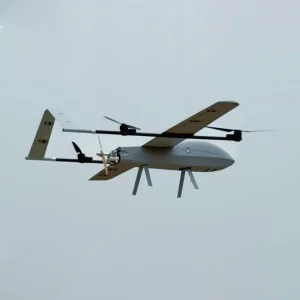
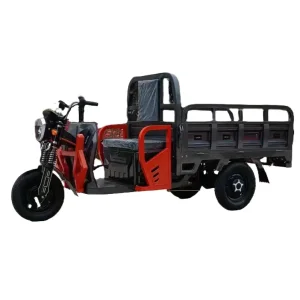
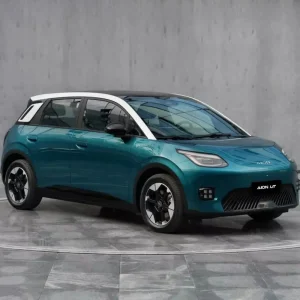
Explore our top-selling industrial vehicle logistics and low-altitude fixed-wing products from our vetted global supply chain network.
The global low-altitude airspace is experiencing unprecedented modernization. As commercial logistics, smart city infrastructure, and agricultural drones proliferate, the requirement for precision tracking and security measures is growing exponentially. OEM UAV Tracking Factories act as the foundational pillars of this defense infrastructure, developing the sensor payloads, radio frequency direction finders, active radar arrays, and management software required to maintain airspace sovereignty.
With massive integration of commercial vehicles, drone logistics hubs, and border security networks, global procurement managers need customizable, rugged, and reliable UAV detection hardware. Shandong Tianli International Trade stands at the intersection of defense technology and global trade, delivering complete parallel trade, logistics, and counter-UAS platforms for security operations globally.

From state-of-the-art manufacturing plants to comprehensive international trade clearances, we execute end-to-end reliability.
A detailed whitepaper breakdown of how modern tracking systems discover, monitor, and classify unmanned aerial targets.
By scanning the electromagnetic spectrum between 400 MHz and 6 GHz, our RF modules identify drone control signals and telemetry links. This passive system operates silently, calculating the relative bearing without emitting radiation, ensuring stealth operations.
Utilizing Frequency Modulated Continuous Wave (FMCW) radar, our OEM installations achieve 3D detection. Our systems map target coordinate points (range, azimuth, elevation) even for nano-scale drones with minimal radar cross-sections.
Equipped with auto-tracking thermal cameras and AI visual algorithms, this system provides visual confirmation. Once the RF or Radar system provides a general coordinate, the EO/IR locks on, validating the threat classification.
| Tracking Technology | Typical Detection Range | Main Advantage | Limitation | OEM Customization Coverage |
|---|---|---|---|---|
| RF Scanning & Interception | Up to 5.0 km | Passive, no emissions, identifies remote controller location | Fails to detect autonomous GPS-guided silent drones | Bespoke antenna array, localized regulatory frequencies |
| 3D FMCW Active Radar | Up to 3.0 km (Micro UAV) | Day/night functionality, works in dense fog & heavy rain | Prone to ground clutter and bird target confusion | Transmission power tuning, custom software DSP profiles |
| Thermal Infrared / Optical | Up to 2.5 km (Visual Lock) | Visual confirmation, dynamic video recording proof | Highly dependent on line-of-sight & atmospheric visibility | Sensor model swapping, multi-axis stabilizer integration |
| Combined Sensor Fusion | System Dependent | Zero blind spots, intelligent cooperative tracking loops | Higher initial capital investment requirement | Unified dashboard software, command center integration |

Navigating the legal landscape of radio transmissions is one of the biggest challenges for buyers procuring global anti-drone or UAV tracking systems. Different nations impose strict regulations on frequency use, electromagnetic interference (EMI), and passive tracking systems. Our OEM services ensure that every system is calibrated to comply with local telecommunication authorities, including the Federal Communications Commission (FCC) in the United States, the European Union's CE markings, and the European Union Aviation Safety Agency (EASA) guidelines.
Shandong Tianli collaborates with research centers and certification agencies to ensure that your local legal safety requirements are met. We manage the technical documentation, export control certifications, and operational frequency configurations, giving security teams peace of mind during deployment.
Shandong Tianli bridges the gap between ground-based mobility and airspace security platforms.
In modern border defense, critical facility protection, and emergency management, static drone defenses are no longer sufficient. Security teams require mobile command units capable of rapid deployment. This is where Shandong Tianli's unique dual-industry expertise shines.
We supply premier new energy vehicle platforms, including EREVs (Extended Range Electric Vehicles) and electric logistics solutions, integrated with local tracking equipment. Our custom command vehicles mount direct-RF trackers, compact active radars, and jamming countermeasure systems, powered by the vehicle's battery. This provides an independent, mobile, low-altitude defense system capable of continuous field operations.
Whether you require a fleet of high-end command SUVs (such as AITO M9 EREV or Leapmotor C10 models configured for field operations) or customized heavy transport logistics setups, our team manages the sourcing, automotive modification, validation, and global export shipping logistics.

A strategic vision outlining upcoming technological updates, AI implementations, and system upgrades.
Transitioning from conventional pixel-contrast optical tracking to AI-based deep visual networks. This minimizes false alarms caused by birds, clouds, and light changes, maintaining visual lock in complex conditions.
Harnessing ambient 5G-Advanced cellular base station emissions to build dynamic passive radar fields. This enables detection of silent, low-altitude intruders without adding electromagnetic clutter to cities.
Allowing multiple remote tracking factories' physical sensors to link and map coordinates. An intrusion tracked by a perimeter radar is instantly handed off to neighboring visual trackers, ensuring seamless coverage.
Answers to common industry questions regarding quotes, technology selection, and sourcing.
Inquire about system specifications, factory quotes, or vehicle integrations. Leave your email address below, and our engineering team will respond within 24 hours.
Broader supply catalog including utility vehicles and drone versions of popular mobility models.