 Tianli
Tianli
Tianli
Enterprise platforms designed for Japan's rigorous technical standards, urban mapping demands, and critical defense specifications.
The Greater Tokyo Area, as the economic engine of Japan and one of the world's most densely populated metropolitan regions, represents a unique frontier for Unmanned Aerial Vehicle (UAV) technology. In recent years, Japan's Ministry of Land, Infrastructure, Transport and Tourism (MLIT) has steadily dismantled regulatory barriers, culminating in the historic authorization of Level 4 flight operations—autonomous flights beyond visual line of sight (BVLOS) over populated areas. This policy pivot has catalyzed massive domestic demand for industrial-grade UAS platforms capable of executing high-precision operations in complex urban airspace.
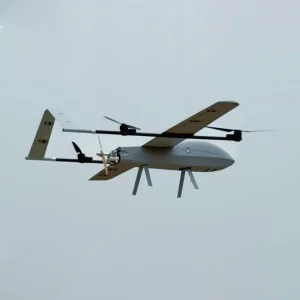
In Tokyo's commercial sector, UAVs are no longer experimental gadgets; they are core capital assets. Industrial conglomerates, maritime authorities in the Tokyo Bay area, and disaster management bureaus are aggressively seeking robust UAV architectures. The deployment of fixed-wing VTOL (Vertical Take-Off and Landing) units, heavy-payload quadcopters, and multi-sensor aerial platforms has become essential to sustain operations, mitigate labor shortages, and ensure rapid disaster responsiveness across the Kanto plain.

Addressing the complex demands of metropolitan surveillance, logistical bottlenecks, and infrastructure diagnostics.
Deploying advanced cargo drones to bridge the logistics gap between central Tokyo distribution warehouses and regional distribution hubs. Our VTOL systems handle payloads up to 50kg, bypassing dense traffic routes and streamlining last-mile fulfillment.
Equipped with thermal imaging and LiDAR sensors, our drones perform automated structural health monitoring on bridges, high-rise developments, power grids, and railway lines, ensuring compliance with strict domestic safety guidelines.
Complete C-UAS (Counter-Unmanned Aerial Systems) defense arrays. We integrate active RF jamming, radar detection, and optical tracking systems to defend sensitive metropolitan zones, government premises, and petrochemical yards from aerial incursions.
Procuring drones for the Tokyo market requires rigorous validation under Japan's Radio Law (電波法) and Telecommunications Business Act. Wireless transmission equipment operating on 2.4GHz, 5.7GHz, or cellular LTE bands must carry the "Giteki" (technical conformity) mark. Our technical engineering division handles certification prep, ensuring that all RF, power amplification, and telemetry systems conform perfectly, preventing seizure at Japanese customs and eliminating compliance risks.

Establishing a robust drone program in Japan involves more than purchasing hardware. It requires localized software integration, regional warranty networks, and immediate hardware repairs. Shandong Tianli International Trade Group operates a dedicated, multi-lingual support framework optimized for Tokyo-based engineering partners.
From handling initial Ministry of Commerce export approvals to assisting clients with registration on Japan's DIPS (Drone Information Platform System) portal, our supply chain covers every phase of deployment. We facilitate customization of onboard flight controllers, integration of GNSS RTK positioning modules compatible with Japan’s Quasi-Zenith Satellite System (QZSS "Michibiki"), and implementation of custom fail-safes for high-density metropolitan environments.
Where AI-driven navigation, solid-state power systems, and edge computing meet the next generation of industrial flight.
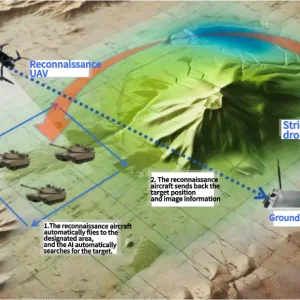
By shifting computational pipelines from ground stations to onboard AI chips, our next-generation flight controllers process real-time LiDAR and optical streams, allowing autonomous navigation through GPS-denied environments like urban canyons or underground tunnels.
Transitioning from traditional lithium polymer cells to advanced semi-solid state batteries. This upgrade enhances overall energy density by up to 35%, ensuring prolonged flight times (exceeding 90 minutes for multi-rotors) and safer operations in sub-zero or high-temperature environments.
Integrating direct 5G network modules allows operators to fly aircraft across Japan while controlling them from operations centers in Tokyo. Direct cloud-telemetry routing ensures latency-free command execution and real-time 4K thermal/visual broadcasting.
Premium UAS configurations and multi-purpose technical platforms optimized for specialized commercial deployment across Japan.








Shandong Tianli International Trade Group is a globally certified supply chain service provider and an industry leader in both advanced automotive logistics and specialized UAS low-altitude security technology. Operating with complete export qualification certified by the Ministry of Commerce of China, our group manages multi-brand parallel auto exports, high-capacity industrial equipment distribution, and specialized UAS development.
Our defense division excels in delivering end-to-end UAS countermeasure platforms and custom commercial drone integration. By combining 12 years of export logistics heritage with modern electronic warfare research, we offer state-of-the-art radar tracking, active RF neutralization, and automated drone mapping systems. Whether designing regional search-and-rescue systems for rugged island environments or supplying low-altitude warning layers for heavy industrial facilities, Tianli remains your reliable, long-term supply chain partner.

Our commitment to reliable low-altitude performance, lifecycle maintenance support, and custom electronic protection systems.

A secure low-altitude environment requires military-grade hardware paired with proprietary communication networks. To achieve this, Shandong Tianli forms strategic alliances with top-tier electronic component manufacturers and cybersecurity firms. This collaboration allows us to deliver:
Expert insights covering procurement procedures, international logistics, Japanese aviation laws, and technical compatibility.
A: Commercial operations are regulated by the Japan Civil Aviation Bureau (JCAB) under the Ministry of Land, Infrastructure, Transport and Tourism (MLIT). Operators must register their drones on the DIPS (Drone Information Platform System) portal and obtain specific flight permissions, especially for Level 3 and Level 4 BVLOS (Beyond Visual Line of Sight) flights over populated urban areas.
A: The Giteki mark indicates conformity with Japan's Radio Law (電波法). Any wireless equipment—including telemetry links, video transmitters, and Wi-Fi modules—operating within Japan must hold this certification to operate legally. Deploying non-certified RF hardware in Tokyo carries strict regulatory penalties and risk of customs confiscation.
A: Backed by our Ministry of Commerce export credentials and 12 years of international trade history, every drone system and mechanical assembly undergoes factory acceptance tests (FAT), hardware calibration, and RF safety verification. We handle customs documentation, licensing, and local agency requirements.
A: Yes, our high-end configurations support GNSS receivers that track Japan's Quasi-Zenith Satellite System (QZSS, also known as "Michibiki"). This allows sub-decimeter accuracy using Real-Time Kinematic (RTK) positioning, which is critical for autonomous drone operations in dense urban areas.
A: We offer scalable detection and neutralization arrays. These include passive RF sniffers that identify drone control frequencies, optical tracking cameras, 3D radar systems, and directional multi-band RF jammers capable of safely grounding or forcing the return-to-home protocol of intruding aircraft.