 Tianli
Tianli
Tianli
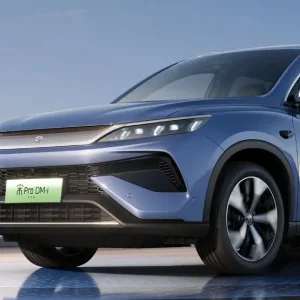
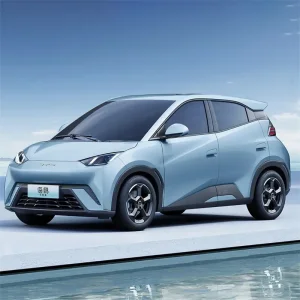
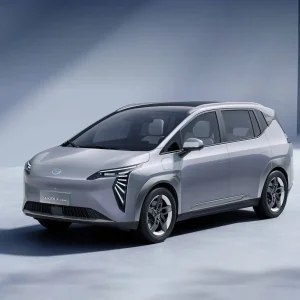
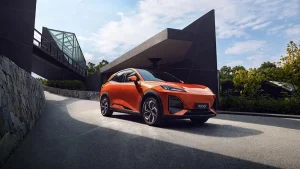
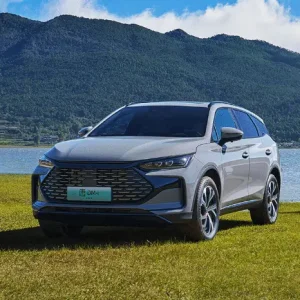
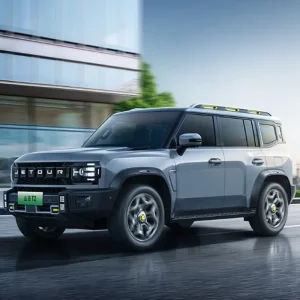
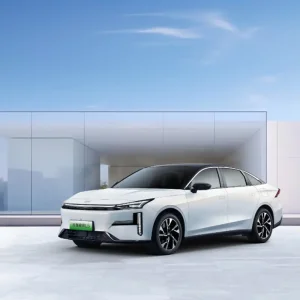
Direct supply line integration for international dealers, ensuring parallel auto export optimization and multi-brand coverage.
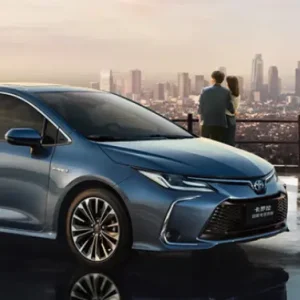
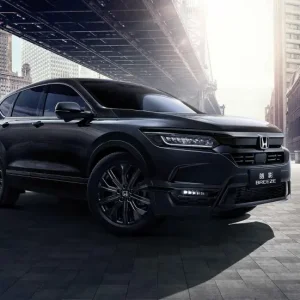
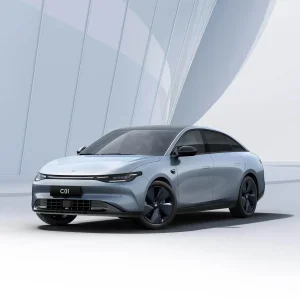
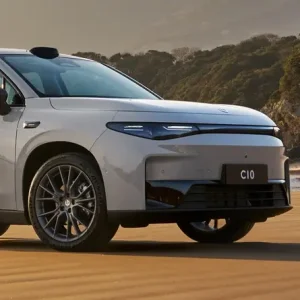
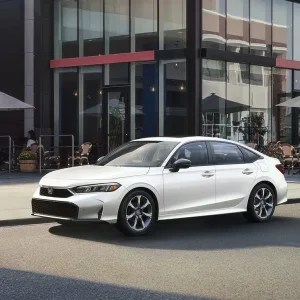
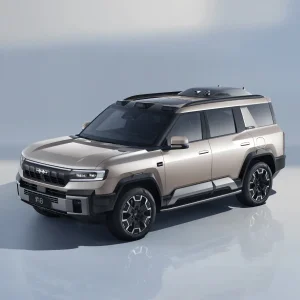
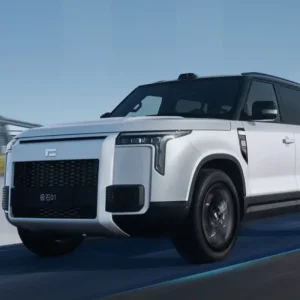
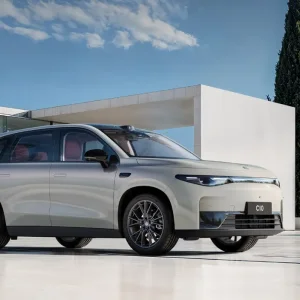
Established in 2012, Tianli International Trade Group has consolidated its position as a multi-billion dollar comprehensive supply chain solutions provider. Operating out of our state-of-the-art 10,000 square meter facility, we integrate automotive sourcing, manufacturing, parallel export compliance, and modern defense systems.
Our engineering and trade expertise is backed by more than 30 invention patents. We operate at the intersection of urban mobility (from high-speed cargo trikes to custom passenger electric three-wheelers) and high-security low-altitude UAS countermeasure applications. By streamlining bulk export approvals through direct certification by the Ministry of Commerce of China, we deliver high-reliability systems to over 40 countries and regions across Europe, Central Asia, Latin America, and the Middle East.
An authoritative analysis of powertrain configurations, legislative speed boundaries, and dynamic vehicle engineering parameters.
The top speed of any ODM electric trike is fundamentally dictated by its power train architecture. Most industrial and commercial trikes operate on brushless DC (BLDC) motors or Permanent Magnet Synchronous Motors (PMSM), ranging from 3kW up to 10kW+. To unlock higher top speeds (50 km/h to 80 km/h) without sacrificing loaded torque, developers leverage Field-Oriented Control (FOC) vector controllers. By utilizing precise flux-weakening algorithms, these controllers extend the motor's speed range beyond its baseline back-EMF limit, enabling rapid cargo transport under optimal thermal limits.
High-speed trike operations introduce complex lateral forces during turning maneuvers. To prevent roll-overs at maximum speeds, ODM chassis configurations employ geometric optimization, centering around a low center of gravity (CoG). Modern engineering utilizes a delta layout (one wheel front, two wheels rear) for heavy-load stability, paired with independent trailing-arm rear suspensions and hydraulic dampening. Implementing electronic brake-force distribution (EBD) and combined braking systems (CBS) ensures reliable deceleration vectors, even when operating at full payload capacities.
Speed limitations are deeply coupled with local geographic requirements. In the European Union, electric three-wheelers fall under the L5e category, authorizing speeds up to 90 km/h if safety compliance standards are met. Conversely, for last-mile inner-city logistics, regulatory frameworks often cap speed limits to 25 km/h or 45 km/h to circumvent complex licensing structures. Tianli offers modular gearboxes and software-adjustable speed limits to let international buyers adapt vehicles dynamically to local compliance policies.
Deploying technological capabilities to optimize efficiency, safety, and supply logistics across major commercial verticals.
Our multi-dimensional research indicates that high-speed commercial trikes are rapidly displacing traditional light commercial vehicles (LCVs) in dense urban corridors. The cost-to-speed ratio of three-wheeled vehicles offers unmatched advantages, reducing vehicle acquisition costs by up to 60% and energy consumption profiles by 75% relative to standard electric delivery vans.
Agricultural and Cold-Chain Logistics: Custom heavy-load trikes are equipped with auxiliary power take-off (PTO) units to drive localized cold-storage units. High-speed capabilities ensure perishable commodities bypass local traffic congestion swiftly, maintaining optimal freshness.
Smart City Low-Altitude Integrations: Through our advanced research in low-altitude management and unmanned aerial systems (UAS), Tianli merges ground-level high-speed delivery networks with low-altitude logistics. By establishing localized command & control platforms, we empower fleet operators to coordinate delivery vehicles and UAS logistics systems synchronously.
Answering high-intent questions relating to ODM high-speed trike designs, supply chain parameters, and configuration guidelines.
The top speed is primarily limited by the voltage of the battery pack (typically 60V, 72V, or 96V LiFePO4 chemistry), the maximum rpm parameters of the motor (BLDC or PMSM), and the programmed amp output of the motor controller. Additionally, physical elements like gear ratio, vehicle gross weight, tire roll resistance, and frontal aerodynamics play structural roles in real-world performance ceilings.
As operational velocities increase, the risk of lateral roll stability issues during tight turns increases. To mitigate this risk, ODM designs optimize steering head angles, lengthen wheelbases, and widen the rear axle width. Furthermore, high-performance variants incorporate active roll stabilization systems or tilting mechanisms that lean the main cabin into turns, ensuring optimal force vectors.
In the European Union, homologation criteria center on EEC/CoC (Certificate of Conformity) classifications under the L-category (L2e, L5e). In the United States, regulations vary by state, often classification falling under motorcycle standards managed by the DOT and NHTSA. This requires compliance with lighting, braking distance, side-impact protection, and safety glass standards.
Yes. Leveraged by our comprehensive engineering pipelines, our 10,000 square meter factory produces high-speed commercial electric three-wheelers tailored to specific range, speed, and payload requests. We handle motor scaling, customized battery pack geometry, and custom ECU parameter programming, supporting both prototype development and mass-scale production runs.
Global export hub featuring certified zero-mile pre-owned systems, commercial clean-energy platforms, and parallel vehicle streams.